More than a crop — a way of life
Coffee is the heartbeat of Uganda's economy and culture. Known locally as the "golden bean," it is the country's biggest export commodity, produced by an estimated one million smallholder farmers, most on plots smaller than 2.5 hectares . But coffee here is not just about export statistics. It's woven into the fabric of society — from ancient Buganda Kingdom rituals to the modern coffee shops now blooming in Kampala. Uganda is Africa's second-largest coffee producer and the world's fourth-largest Robusta producer . Let's take a journey from seed to cup, exploring the varieties, the regions, the hands that make it all possible, and most importantly — how Ugandans themselves have always prepared and enjoyed it.
🌱 The two sisters: Robusta and Arabica
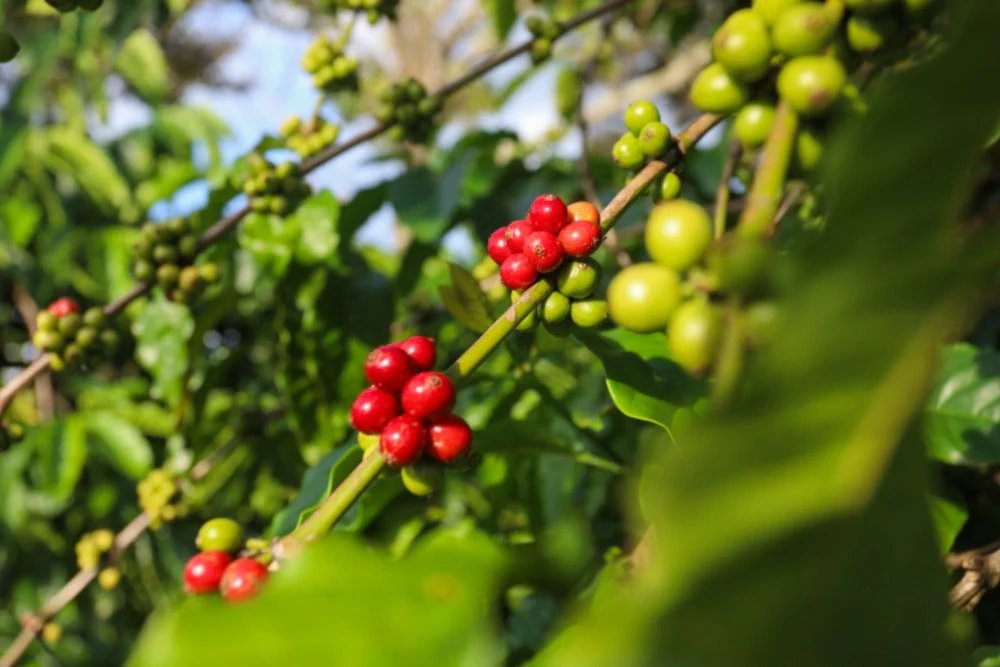
Uganda is one of the few countries where both commercial coffee species thrive naturally .
- Robusta (Coffea canephora): Native to Uganda — it grows wild in the Lake Victoria basin. Hardy, higher caffeine, earthy, chocolaty notes. Grown mainly below 1,400m .
- Arabica (Coffea arabica): Introduced from Ethiopia in the early 1900s, flourishes at higher altitudes (>1,400m) with cooler temperatures. Bright acidity, floral and fruity flavours .
📜 A sacred crop: Coffee in Buganda Kingdom
Long before it was a commodity, Robusta coffee (mwanyi in Luganda) was a sacred plant for the Baganda people. It grew wild and was later cultivated in household gardens for cultural ceremonies: sealing blood brotherhood, initiating new members, celebrating the birth of twins . Elders chewed the beans, and the crop was revered. Then came colonialism. In 1894, the British turned coffee into a cash crop, and over time, its deep cultural significance faded — though it never disappeared.
🗺️ Uganda's coffee regions & flavor profiles
In December 2025, Uganda unveiled its first scientifically validated Regional Coffee Flavor Profiles . Here's what makes each zone special:
Kyoga Plains
Robusta — Bold, spicy, nutty, chocolaty aroma.
nutty · chocolateLake Victoria Crescent
Robusta — Tropical fruit, resinous, balanced sweetness.
tropical · resinNorthwestern Savannah
Robusta — Dried fruit fragrance, citrus notes.
dried fruit · citrusSouthwestern Farmlands
Robusta — Smooth, subtle chocolate, full body.
chocolate · smoothHighland Ranges
Arabica — Citrus brightness, cocoa aroma.
citrus · cocoaWestern Savannah
Arabica — Dried fruit, spicy, berry notes.
complex · berry📸 Landscapes of the golden bean
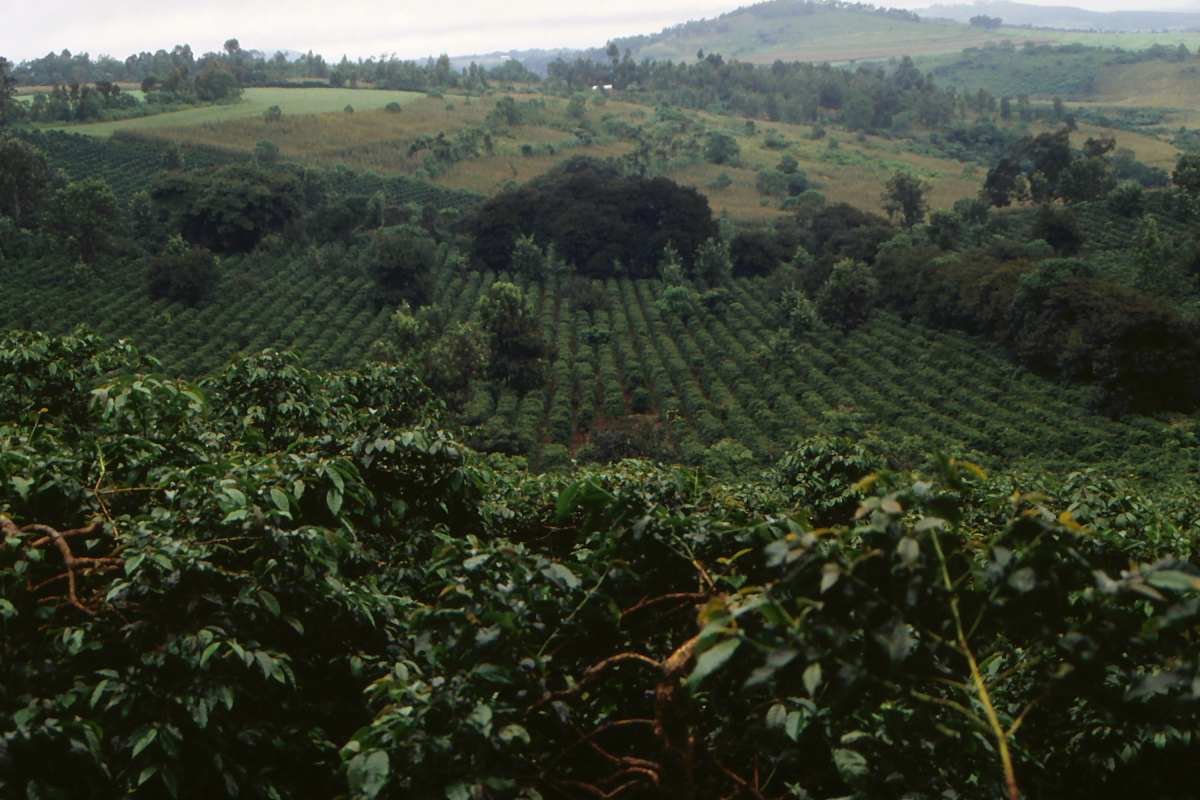
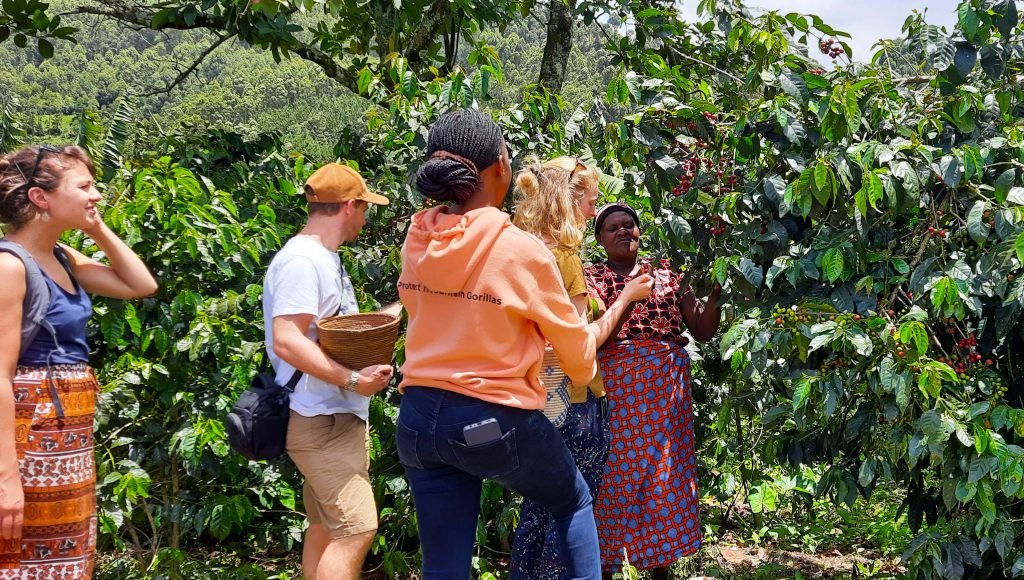
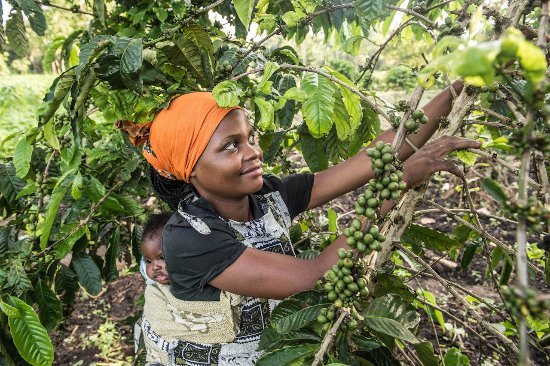
🌿 From cherry to export: the journey of Ugandan coffee
Planting
Intercropped with bananas, beans for shade. New Kituza Robusta (KR) series bred for resilience .
Harvesting
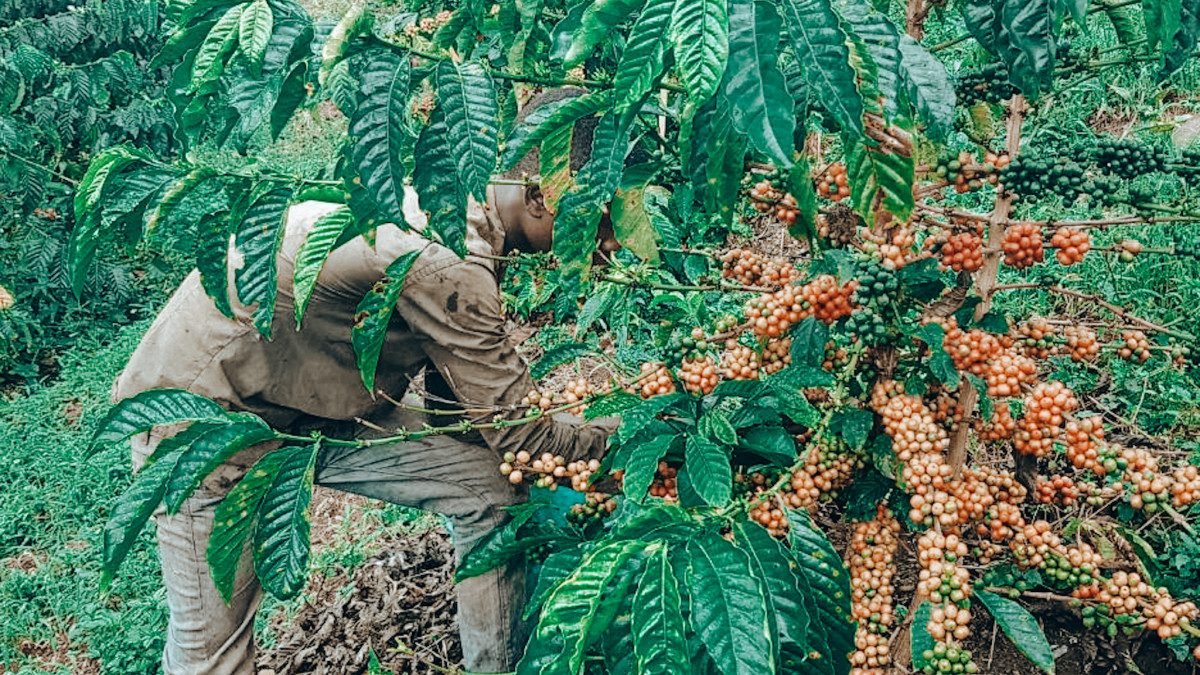
Only ripe red cherries hand-picked. Selective, ensuring quality.
Processing
Natural: sun-dried with skin. Washed: pulped, fermented, washed, dried .
Milling
Hulling, polishing, hand-sorting, grading by size (Screen 18,15,12) .
🔥 How Ugandans brew coffee at home: the traditional way
Despite the huge export industry, many Ugandans—especially in rural areas—have never tasted a cappuccino. Instead, they prepare coffee in a way that has remained unchanged for generations. This is not about espresso machines; it's about fire, clay pots, and community.
1. Sun-drying & pounding
Freshly harvested Robusta cherries are spread on mats and dried in the sun for days until the husk shrivels. Then, using a wooden mortar and pestle (okinwalo in Luganda), the dried cherries are pounded to crack the husk and release the beans. It’s rhythmic, social work — often done by women while singing.
2. Winnowing (okuseesa)
After pounding, the mixture is tossed in flat baskets (ensero). The lighter husks blow away, leaving the green beans. This is where skill matters: a good winnower loses no beans to the wind.
3. Roasting over open fire
The green beans are roasted in a clay pot or metal pan over a wood fire. Constant stirring with a wooden spatula prevents burning. You can smell roasting coffee from afar — it signals a gathering. The beans pop and crackle, turning from green to deep brown. Roast level varies by preference, but most prefer dark, almost oily beans.
4. Grinding & brewing
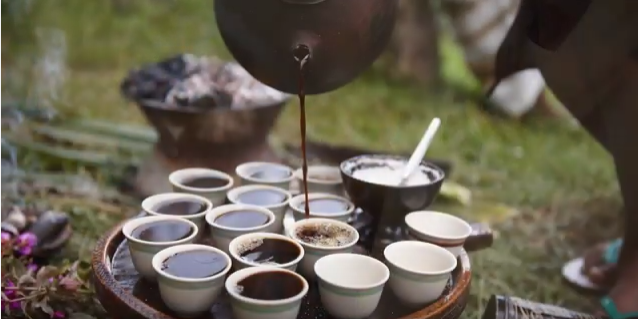
Freshly roasted beans are ground using a stone or in a mortar again. The coarse grounds are then boiled in a clay coffee pot (ekyansi) with water, ginger, and sometimes local spices like cinnamon or cardamom. It's left to simmer until the grounds settle. The brew is poured into a cup, often sweetened with honey or sugar — but never milk.
In many homes, coffee is shared only among adults and respected guests. It's not just a drink; it's a gesture of welcome, a moment to pause. In some communities, the oldest man is served first, and the conversation flows around the clay pot . This is the heartbeat of Ugandan coffee culture — far removed from the espresso machine, yet deeply authentic.
👩🏿🌾 Farmers and change-makers
Behind every bean is a story of resilience. The Omwani Women's Cooperative near Queen Elizabeth National Park grows organic Arabica and Robusta without chemicals, empowering HIV-positive widows and providing school fees for their children . In Mubende, farmer Yekosefati Sekabembe transformed his 25-acre plantation after government training, now producing high-quality beans .
☕ Experience coffee tourism in Uganda
🌋 Kisoro
Volcanic slopes, Arabica with bright acidity. Combine with gorilla trekking .
💧 Sipi Falls
The classic coffee tour — waterfalls, terraced farms, traditional processing .
🦁 Queen Elizabeth (Omwani)
Women's cooperative welcomes visitors, 1,500+ plants, hand-processing .
🌳 Jinja / Mabira
Robusta-growing areas near the Nile.
📅 Ready to taste the golden bean?
Let Kyobe Safaris design a custom coffee tour — visit a women's cooperative, trek gorillas, and sip fresh brew overlooking the Virungas. Every booking supports community projects.
“We sat with a grandmother in her hut, watched her roast beans over the fire, then drank coffee brewed with ginger. It was the most authentic cup of my life.”
— Emma, Melbourne (travelled Aug 2025)
❓ Frequently Asked Questions
How do Ugandans traditionally prepare coffee at home?
They sun-dry cherries, pound them in a mortar to remove husks, winnow, roast over fire, grind with a stone, and boil with water (often ginger/spices). It's a slow, ceremonial process .
Can I witness a traditional coffee ceremony?
Yes! On our coffee tours, we arrange home visits with local families who demonstrate the entire process — from pounding to roasting to sharing a cup .
What is the best time for coffee tourism?
Harvest seasons vary: Arabica in Mount Elgon around October–January; Robusta in central region has two peaks (May–August and November–February) .
How does coffee help local communities?
Initiatives like Omwani Cooperative empower women, pay school fees, and support HIV-affected families. Tourism dollars go directly to farmers .
📖 Read more: Kibale: The Primate Capital → or How your safari helps children return to school